Sign up to our newsletter!
No matter if you are moving, or improving, our newsletter is packed with the best tips, tricks and ideas to help you dwell well.

As energy bills continue to rise for many people around the country, temperatures are beginning to drop. This is not an ideal scenario for most and unfortunately, heating our homes has become a daunting prospect as winter begins to take hold.
Many of us are striving to keep costs down while working from home, welcoming family over the festive period and generally trying to live our lives. But there are ways we can upgrade our homes to ensure we retain as much heat as possible and keep the frost from biting too hard.
As much as we need to keep the warm air inside, we also need to ensure that any chills are left outside. That means stopping draughts, closing doors and windows and applying weatherstrips to eliminate any freezing breezes. Investing in a good draught excluder can make all the difference to doors with large gaps at the bottom while using keyhole covers further eliminates any cool air.
Our curtains and blinds can also be upgraded with thermal linings, which can reduce heat loss by as much as 25% if used at dusk. To help reduce costs you may wish to make your own thermal lining using polyester or wool to improve the insulation around your windows and doors.
With the potential threat of energy blackouts playing on people’s minds, it’s important that rather than ignoring the problem and hoping it goes away, we plan for this scenario. In this instance, it may be better to have a backup plan and not need it rather than needing a contingency and not having one. With the government testing the waters for seven-day blackouts in the worst-case scenarios, we must have an idea of the things we will need to survive.
Energy blackout checklist:
For starters, torches, spare batteries, candles and matches will be necessary to see if we can’t switch our lights on.
If the power goes off keep the doors to your fridge and freezer closed as this will prolong the life of the food or medication inside.
Stocking up on blankets and warm clothing will be essential if the power goes out and you don’t have a wood-burning stove to rely upon.
Source appliances that can run on alternative power sources, such as portable power banks or chargers.
Fireplaces are a great source of heat and joy as we watch the warming glow of burning wood transfer its heat to our living rooms. But while an attractive addition to a home, some fireplaces are not the most heat efficient, or those who use them don’t manage to run them as efficiently as they could. For instance, the dampers are for keeping air and moisture out of the firebox but not closing them once the fire has gone out is like leaving a door open, and all the cold air that comes with it.
Glass fireplace doors are an energy-efficient upgrade you can bring to your home as they help to retain as much as 90% of the heat created by your fire. This is a vast improvement on the 15% retained by a traditional masonry fireplace, with 85% of its heat going straight up the chimney.
Switching from a masonry fireplace to an electric version may be the most energy-efficient home improvement. Many modern homes are so well insulated that the fire your room needs is often one where the heat can be operated totally independently of the flame. This offers better control and isn’t wasteful like some masonry fireplaces can be.
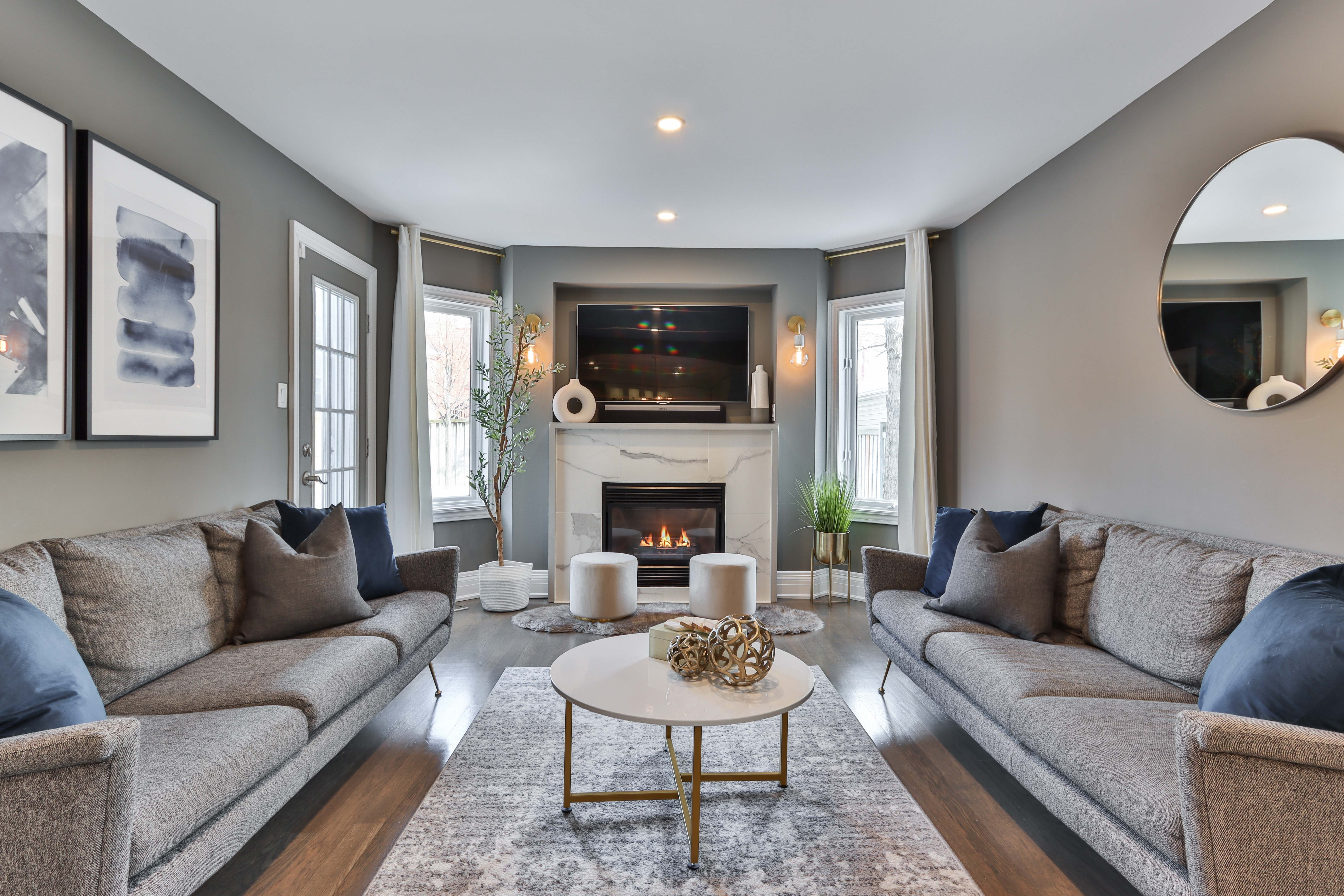
A quarter of the heat lost from homes escapes through our roofs. But, by installing or upgrading the insulation in your loft, you can drastically reduce the heat loss, ensuring you spend less energy trying to keep the rest of the house warm.
With heating bills increasing across the board, wasting a quarter of that addition to your bill by heating the sky seems like a waste. Consider sustainable insulation materials to help reduce your impact on the planet, or integrate an insulation project with a loft conversion.
If the cost of heating your entire home is too much, consider creating one ‘winter warm room’ that is comfortable to live in and turn down the heating in other places. You may even wish to turn the heating off in all rooms that you are comfortable not using during the winter, switching from heating the living room during the day and the bedroom at night.
Make this room, possibly your living room, as cosy as possible with soft furnishings like throws and blankets, and mood lighting such as fairy lights or tealights. With a bleak-looking winter, this small renovation project can add some much-needed fun to your home. However, fully turning off your heating is not advisable as it may impact your sleep, mental health, aggravate asthma and increase the risk of cardiovascular disease or complications.
It may not have been high on your priority list before but consider where your furniture is positioned in relation to your radiators. For the winter it may be more energy efficient to move bulky items like sofas or cabinets away from heaters to ensure they are doing a better job of supplying your home with heat.
Even a partial blocking can prevent heat from moving around the room. Additionally, move your furniture away from any external walls as you will feel the cold more quickly while sitting so close to potential draughts. Moving your furniture to the centre of the room will make you feel the cold less, and you will be less inclined to turn the heating on.
The heat from many radiators simply travels upwards, rather than out and into the room they are situated in. Something as simple as placing a shelf above a radiator can act as a shield, bouncing the heat off it and into the room to heat it much faster and more effectively.
This allows for a more even distribution of heat, rather than creating hot and cold spots which can leave you feeling the cold more. Good radiator management is essential for the winter, so ensure you bleed your radiators to remove trapped air and allow them to heat up much faster.
Live well with Moving and Improving