Sign up to our newsletter!
No matter if you are moving, or improving, our newsletter is packed with the best tips, tricks and ideas to help you dwell well.

Moving into a new home is exhilarating and overwhelming. Your new house is yours, but it doesn't feel quite yours yet. The previous owners' choices (colours, finishes, style) are everywhere.
The urge to change everything immediately is strong, but the reality is you won't have the energy, budget, or time to refresh the entire house at once. Homes that truly feel like home are built on deliberate choices about what to tackle first, not what you can see and finish quickly.
A few strategic improvements in your first weeks and months can transform how you feel in your new space. You don't need to gut-renovate, but instead use some creative energy to prioritise your changes.
Your kitchen will be the first room to show wear. Here the spills happen, the steam rises from the hob, and morning light reveals every surface in whatever glory. This is why it deserves your attention early on.
If the kitchen is dated but structurally sound, focus on the surfaces you see and use every day. Cabinet hardware is one of the easiest wins. Swapping out handles and knobs costs little but shifts the entire feel. Fresh paint on cabinet doors is remarkably transformative.
Worktops take more investment but deliver enormous visual impact. If your existing worktops are damaged or dated, replacing them changes how you feel about the entire room. Options exist at every price point, from laminate to engineered stone to real granite. Splashbacks matter too, with new tiles or paint behind the hob and sink completely refreshing a dated kitchen.
Most people underestimate how much lighting transforms a room. Harsh overhead fixtures drain the space, while task lighting under cupboards and ambient pendants can make the same kitchen feel entirely different. And flooring? It matters, but approach it practically. Kitchen floors take heavy use and need to withstand water and heat. Whatever you choose needs to be durable and easy to clean first, beautiful second.
Top tip: Start with things you can see and feel every day: handles, paint, lighting, splashback. Work toward structural elements (worktops, flooring) as your budget allows.
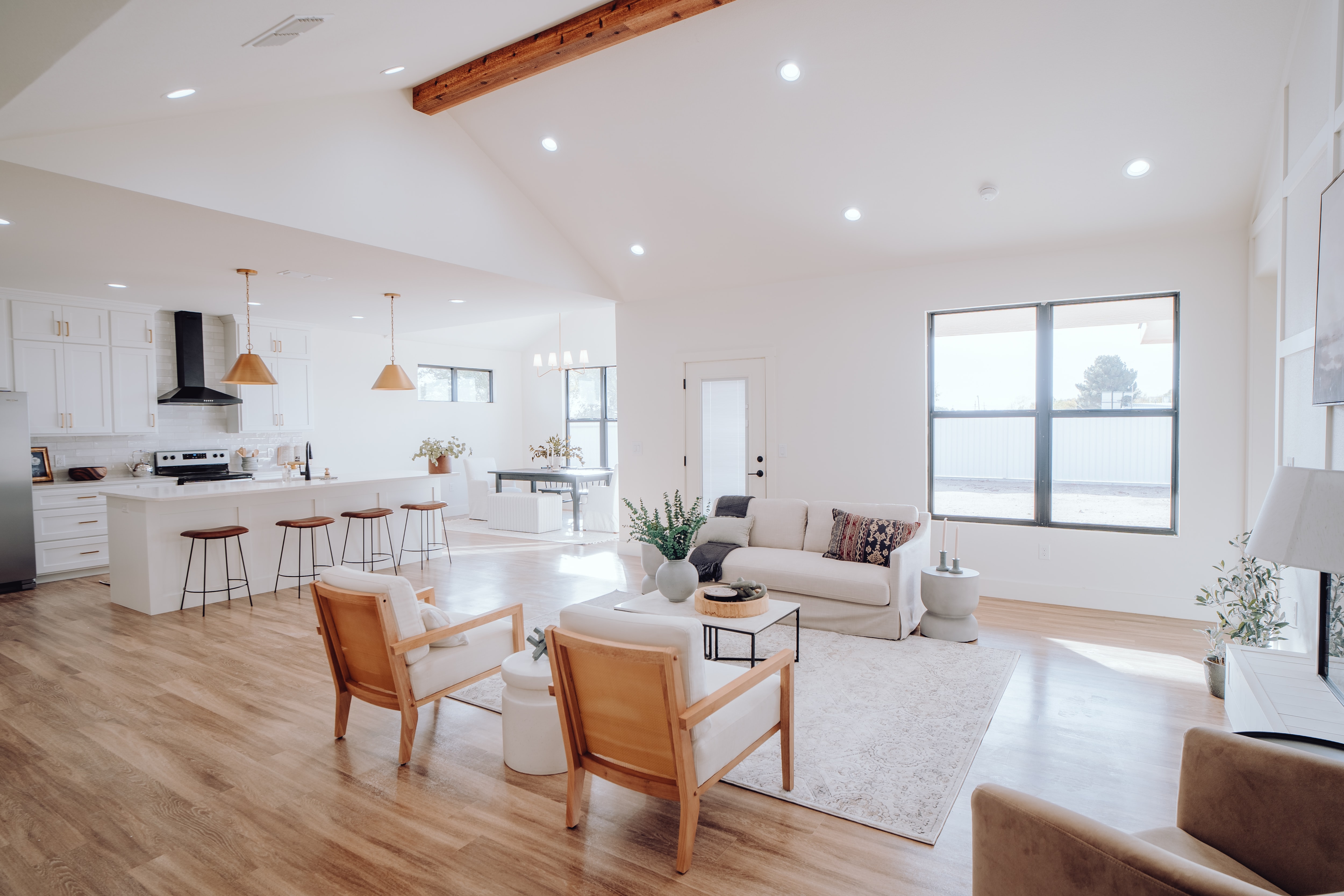
The living room is where your home starts to feel lived-in. It's where you collapse at the end of the day, guests sit, and where you notice every mark and worn patch. Unlike the kitchen, this space is more forgiving: spills matter less, heavy traffic is lighter.
This is where flooring becomes about atmosphere as much as practicality. Your living room floor should feel good underfoot and complement the light that comes through your windows. When you decide to refresh this aspect, your choices will shape how the entire room feels.
A warm timber effect brings cosiness and intimacy. Pale stone tones open up the space visually and feel fresh. If your budget doesn't stretch to genuine hardwood, modern laminate and luxury vinyl tiles have come a long way, convincingly replicating natural materials while being far more practical for everyday living.
Understanding how different materials work in your space is crucial. What looks good under showroom lighting may feel entirely different under your living room's natural light. Seeing samples in your actual space through a home design consultation helps clarify which material will suit the room best, something Greg Stone Flooring specialises in. You can see how the texture catches light in your room, how it sits alongside your furniture, and whether the colour warms or cools the space. This groundwork prevents costly mistakes later.
Colour decisions deserve real thought, not quick fixes. Bold accent walls work brilliantly here if you're ready to be adventurous, or warm neutrals create a calming backdrop if you prefer subtlety.
Top tip: If you're replacing flooring, do it before you paint. Dust from installation will settle on fresh paint, so complete the structural refresh first, then add colour and finishing touches.
Your bedroom should feel restful, not trendy. Deep, warm tones create intimacy and signal rest is coming. Pale, soft neutrals feel airy and spacious. Softer, dimmable lighting instead of harsh overhead lights makes an enormous difference. Good blackout blinds or heavy curtains help create a space that feels protected and separate from the outside world.
Your bathroom is a practical space. If it's structurally sound (no leaks, no mould, good ventilation), focus on cosmetic improvements: a new mirror, updated lighting, fresh grout, and a thorough clean. Good ventilation prevents mould and keeps the space feeling fresh. If it needs more work, focus on function first. Water resistance, proper ventilation, and durable surfaces matter more than the latest tile trend.
Top tip: Your bedroom is one place where trends matter far less than how you actually feel in the space. Skip the Instagram aesthetic if it doesn’t make you feel genuinely restful.
If your home feels cramped or lacks a dedicated space for work or guests, you have options beyond knocking down walls. A well-designed garden studio can transform how you use your property. Unlike a full extension, which requires planning permission and months of disruption, a garden building can be installed relatively quickly and designed to complement your existing home. Suddenly you have a proper home office, a studio, or a retreat space.
Top tip: Garden buildings offer a low-disruption way to add functional space.They’re a practical option if your main home needs to stay habitable during improvement work.
Homes that truly feel like home are built on smart prioritisation. The spaces you use most (your kitchen, living room, and bedroom) deserve your attention and budget first. The finishing touches can come later.
Thinking through your renovation priorities before you start prevents costly mistakes and ensures your improvements address what matters most to you. Whether that's a refreshed kitchen that works beautifully, a living room that feels genuinely restful, or a bedroom that supports good sleep, these early choices compound. Your new home is a blank canvas, but you don't have to fill it all at once. You just have to start in the right places.
Annie Button is a UK-based freelance writer specialising in property, sustainable living and well-being. Her work explores practical, realistic ways to create greener, healthier homes amid the realities of fast-paced modern living. A keen photographer, she has a particular interest in promoting positive lifestyle choices, one step at a time. 
Live well with Moving and Improving