Sign up to our newsletter!
No matter if you are moving, or improving, our newsletter is packed with the best tips, tricks and ideas to help you dwell well.

Traditional home extensions have increasingly become out of reach for people, with rising material costs and labour shortages impacting waiting times. Often, months of delays are necessary just to gain the extra space we need in our homes.
This has led to more homeowners thinking outside the box when it comes to expanding their living space. One elegant solution is to transform outdoor spaces into functional, year-round living rooms that blend seamlessly with interiors and offer all the benefits of additional square footage without the construction headaches.
The foundation of any stylish outdoor is the right foundational materials. Choices range from composite decking, hardwoods, or natural stone which set the tone for the rest of the space and determine its longevity and how much time you’ll need to devote to maintenance.
Composite materials provide fantastic levels of durability and weather resistance with minimal upkeep, while natural stone delivers timeless elegance and thermal mass that helps regulate temperature throughout the year. For warmth and natural beauty, there’s natural hardwood decking, but bear in mind that this option requires more maintenance to preserve its appearance and structural integrity over the years.
Instead of heading indoors when the weather turns, installing shelter gives you more options and makes your garden more functional throughout the year. Stylish and practical solutions, such as a louvered pergola, are available from many outdoor specialist providers like Suns Lifestyle.
This structure creates a ceiling effect and can be tied in with lighting or heating elements, giving you weather protection when you need it and light when you want to make the most of the great weather. A pergola's vertical posts also naturally define the room's boundaries and provide anchor points for additional features like curtains or climbing plants.
Living walls created through hedge planting offer year-round screening while contributing to the garden's ecosystem. However, decorative screens made from materials like bamboo, metal, or composite panels give you more immediate privacy and can be easily adjusted or relocated as your needs change.

Seating will form the heart of your outdoor room, but you need to prioritise comfort and weather resistance, so it can be a tricky area to design. Modern outdoor furniture has evolved to include sophisticated pieces that rival indoor furniture in both style and comfort. Look for furniture with aluminium or stainless-steel frames, weather-resistant cushions filled with quick-dry foam, and fabrics treated for UV protection and moisture resistance to extend the life of your outdoor room.
For many of us, an outdoor living room is all about entertaining friends and family, and making memories throughout the year with al fresco meals. Choose tables and chairs that can withstand temperature fluctuations and will keep their appearance over time, adding cushions and throws for when temperatures dip and meals extend into the early hours. Extendable dining tables offer more versatility for different group sizes, while stackable chairs provide easy storage when the dining area isn’t in use.
If you’re keen to entertain and regularly host dinner parties and gatherings, you might be inclined to add a kitchen to your outdoor room too. A built-in barbecue station, pizza oven, or even a full stove and refrigerator set-up will elevate your garden and add an impressive focal point.
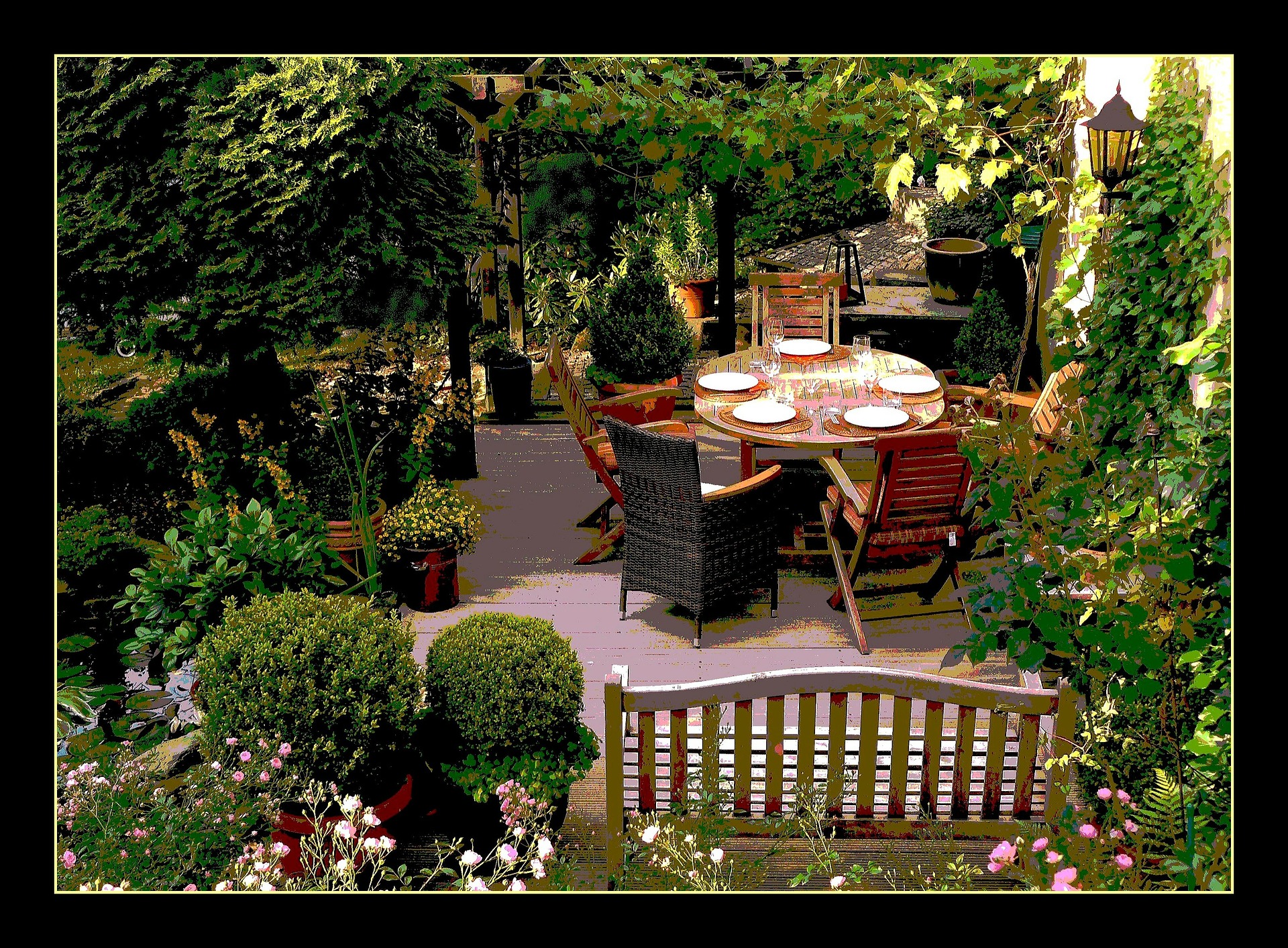
Ambient lighting doesn’t just set the mood, but it also makes your outdoor space more practical too. String lights suspended from pergola beams or tree branches provide gentle, diffused illumination, while functional lighting serves a practical purpose to enhance the safety and usability of the space at night. In particular, add pathway lighting to keep you and your guests safe when walking between the house and outdoors.
You also need to think about heating to be able to use your outdoor room in the autumn and winter. Overhead infrared heaters are one of the more space-efficient options, keeping everyone warm without taking up any floor space. Alternatively, you could add portable patio heaters that can be moved around for more flexibility. Fire pits are a popular option if space allows and they naturally create a gathering point, not to mention incredible ambiance and warmth.

Continuity is important when creating an outdoor room—you want to pay close attention to the materials, colours, and design elements you incorporate to ensure it doesn’t feel separate from the rest of the house. Blurring the lines between indoors and outdoors is what will make this space feel cohesive and in keeping with your style.
If matching materials aren’t practical, look for options that share similar textures or are part of the same colour family. Interior design elements like similar lighting fixtures, furniture styles, or decorative accents can be repeated outdoors using weather-appropriate versions.
Bi-fold doors create dramatic openings that essentially eliminate the barrier between inside and outside when fully opened, while large sliding doors offer similar benefits with a different aesthetic appeal. If you want a more traditional connection point, French doors work perfectly—just keep the door's orientation relative to prevailing winds and sun exposure to maximise light and comfort in both spaces.
The concept of an outdoor room offers homeowners an innovative solution to space constraints without the cost or complexity associated with a traditional extension. A thoughtfully designed space that blends the comfort, functionality, and style you’ll find indoors means you can effectively double your square footage while maintaining a strong connection to the outdoors.
Live well with Moving and Improving